

Chongqing Xingce Electronics Releases Cross-Platform GenICam and GenTL SDK Examples
Chongqing Xingce Electronics Releases Cross-Platform GenICam & GenTL SDK Examples,
Supporting the Full Xingce Electronics Hardware Series.
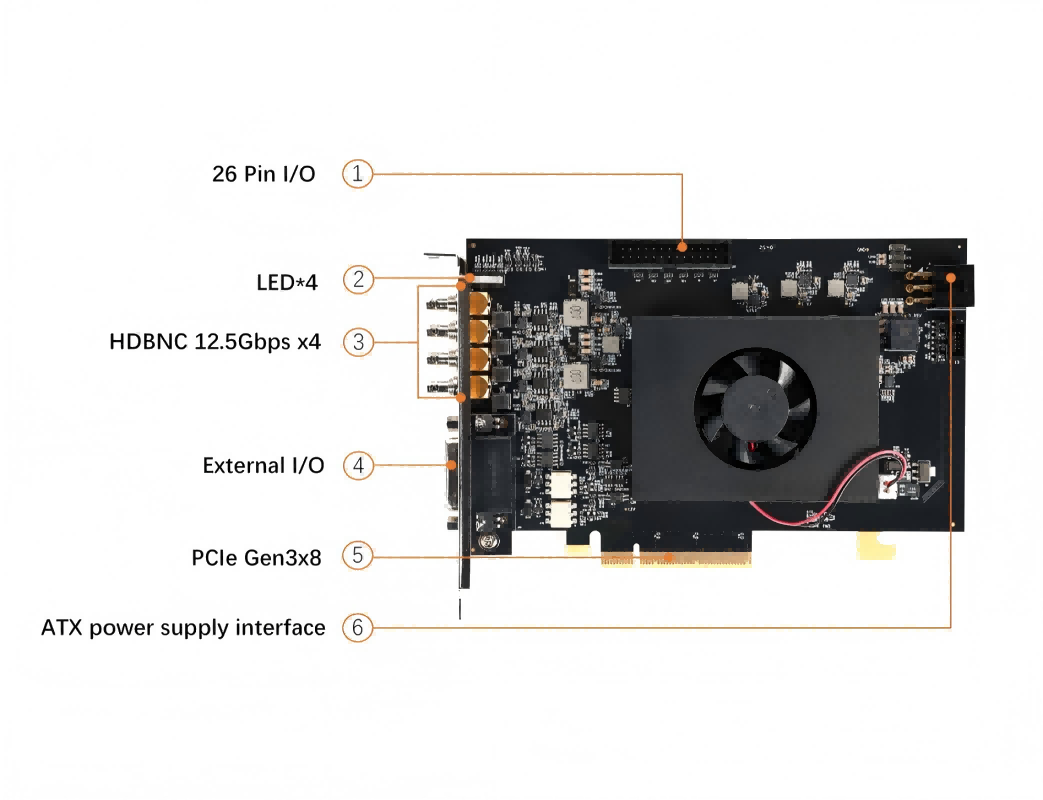
Xingce Electronics has launched new CoaXPress and Camera Link image acquisition examples for its full series of frame grabbers, including the PCIe1004 / PCIe2004 / PCIe3004 / JetKU-CXP1004 / JetKU-CL4001. Supporting both Windows and Linux platforms, the release covers 27 ready-to-use examples for GenICam Aravis, GenTL, and Qt GUI development.
This release features the first-time availability of GPU Direct DMA direct-to-video-memory capability on Linux, facilitating a seamless transition from prototype to mass production in fields like semiconductor inspection and scientific imaging.
📦 Example Content Overview
- Aravis Examples (13): Covering image acquisition, camera parameter configuration, timer/counter/encoder control, digital IO, FPGA status monitoring, QSFP optical module monitoring, performance testing, and loopback testing. Based on a customized Aravis-0.10, it deeply exposes the Hello-FPGA private interface capabilities.
- GenTL Examples (13): Fully compliant with the industry-standard GenTL, supporting seamless integration with third-party vision software ecosystems. Includes scenarios like image capture, CXP link configuration, performance stress testing, timer/encoder linkage, and CameraLink camera acquisition (Linux exclusive).
- Qt Graphical Interface Example (1): Provides a Qt5-based real-time image viewer, arv_qt_viewer, for a ready-to-use visual debugging experience.

🚀 Development Support & Performance Highlights
Customers receive comprehensive, out-of-the-box development support:
- Windows: Open the included Visual Studio 2022 solution (PCIe1004_Examples.sln) to compile and use.
- Linux: A single
makecommand compiles the examples, with native support for x64/aarch64 architectures.
The highlight of this release is the Linux-exclusive GPU Direct DMA example. With this example, the frame grabber engine can write image data directly to GPU memory, with the CPU never touching the image data. This eliminates the traditional Host→GPU copy in the data path. Tests show that data delivery time is reduced from the traditional 2-3.5 milliseconds to nearly zero. Each example comes with detailed documentation, providing a solid foundation for prototype validation. Feel free to download and reference them.


